Lighting
Vintage Italian Lighting
Few categories of vintage design have aged as gracefully as Italian lighting. Across decades, Italian workshops shaped glass, brass and ceramic into lamps that feel less like fixtures and more like small sculpture. They change the atmosphere of a room well before they are switched on. This is a short, practical guide to why these pieces still matter, what to look for, and how Lumont thinks about them when sourcing for clients in Copenhagen and beyond.
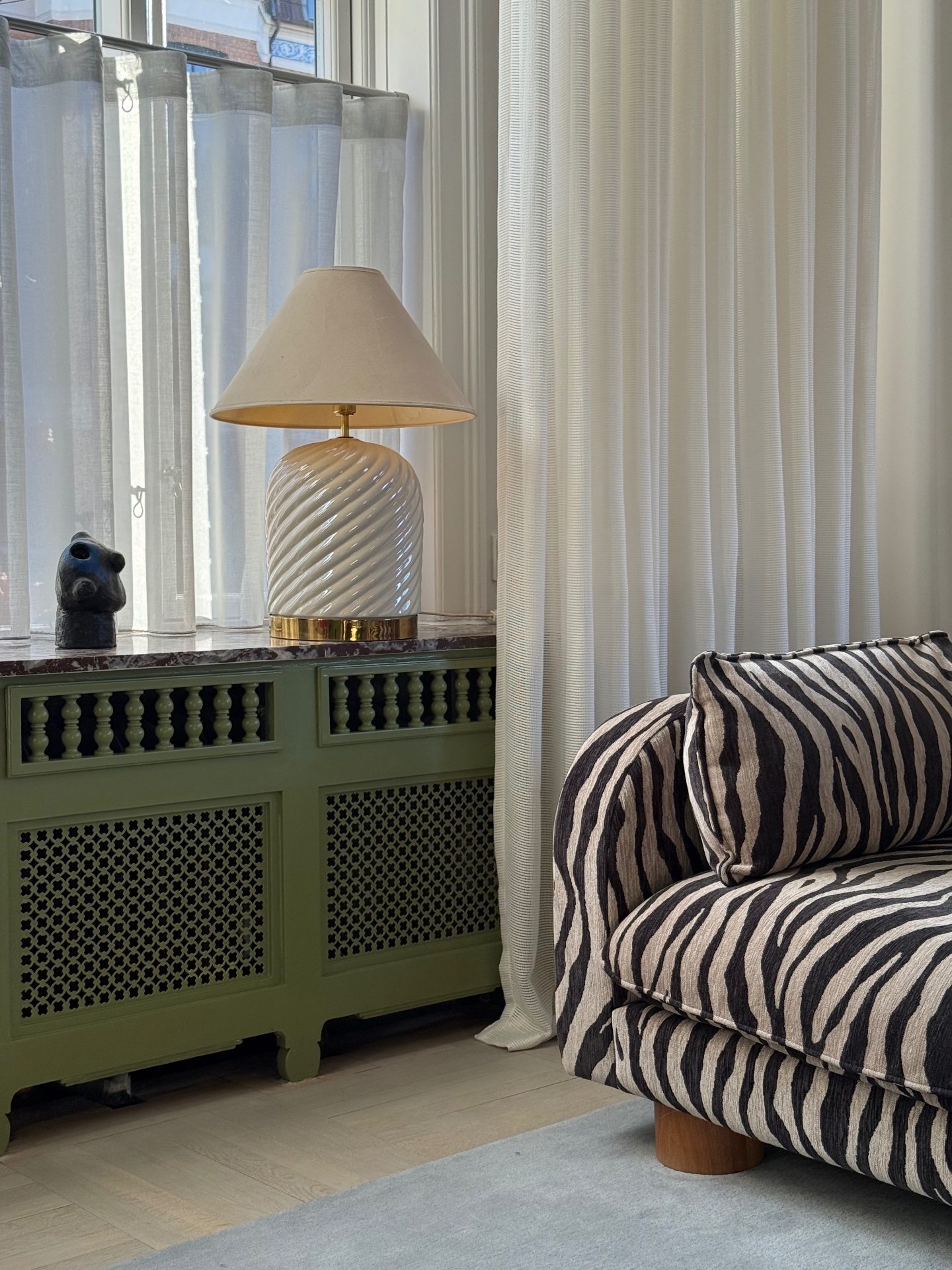
Why vintage Italian lighting changes a room
A lamp does two things at once. It shapes the light in a room, and it sits there as an object during the hours it is switched off. Vintage Italian lighting tends to take both jobs seriously. The shades soften and diffuse light rather than spotlighting it, and the bases carry enough character to earn their place on a console or sideboard during the day.
Part of what makes these pieces feel different is the unhurried way they were made. Hand-blown glass, hand-finished ceramic, brass fittings turned and lacquered by people who understood proportion. None of it was designed to be replaced in two years. That intent is still legible decades later. A small ribbed table lamp from the 1970s often does more for a corner than a much larger contemporary fixture.
Vintage examples also carry small marks of use: a faint patina on brass, a soft cloud in old glass, a chip on the underside of a ceramic base. These are part of the object's character. Restoring them away usually takes more than it gives.
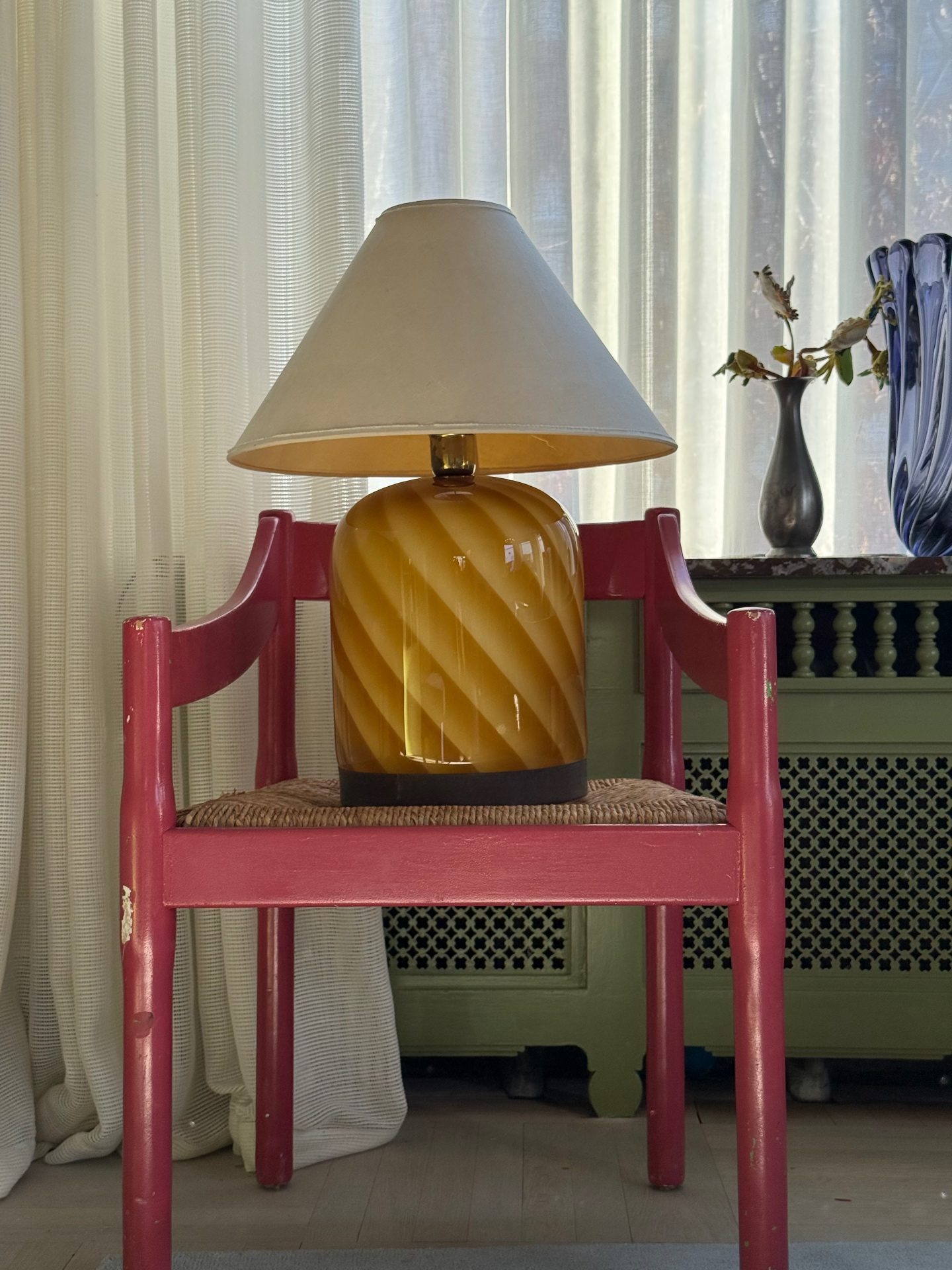
Materials and forms: glass, ceramic, brass
Italian lighting from the 1950s to the 1980s is easiest to read through its materials. Murano and other Italian glassworks produced layered, hand-worked shades and bases with a depth that pressed glass rarely achieves. Ceramic from the same period, often in cream, off-white, soft green or coral, gave designers a way to make sculptural bases that still felt domestic. Brass tied everything together, used for stems, collars and bases that warm up over time.
Forms drew freely from nature and from geometry: pleated leaves, lotus buds, scalloped shells, mushroom domes, ribbed columns. The vocabulary is decorative without being loud, which is why these lamps continue to sit comfortably in interiors that lean minimal, classical or layered.
When Lumont describes a piece, the material and form are named honestly. Murano glass is called Murano only when the origin is clear. Where a piece belongs to a wider family without confirmed attribution, it is described as in that style. Nothing is invented into something it is not.
How to style table lamps on sideboards, bedside tables and consoles
A vintage table lamp prefers company. On a console, pair it with a stack of books and a small bowl or vase, and the corner of the room becomes a still life. On a sideboard, two lamps at either end frame what sits between them: a tray, a ceramic, a piece of art leant against the wall.
Bedside tables ask for a softer scale. A smaller ceramic or glass lamp with a warm, low-wattage bulb and a linen or parchment shade tends to read better than a tall, formal piece. If both sides of the bed take a lamp, they do not have to match. Two pieces from the same family, in conversation, often look more considered than a perfectly mirrored pair.
As a general rule, group lamps in odd numbers across a room and mix heights. Let vintage lamps be the visual anchor of a corner rather than competing with overhead light. Dimmers help. So does turning the big lights off earlier in the evening.
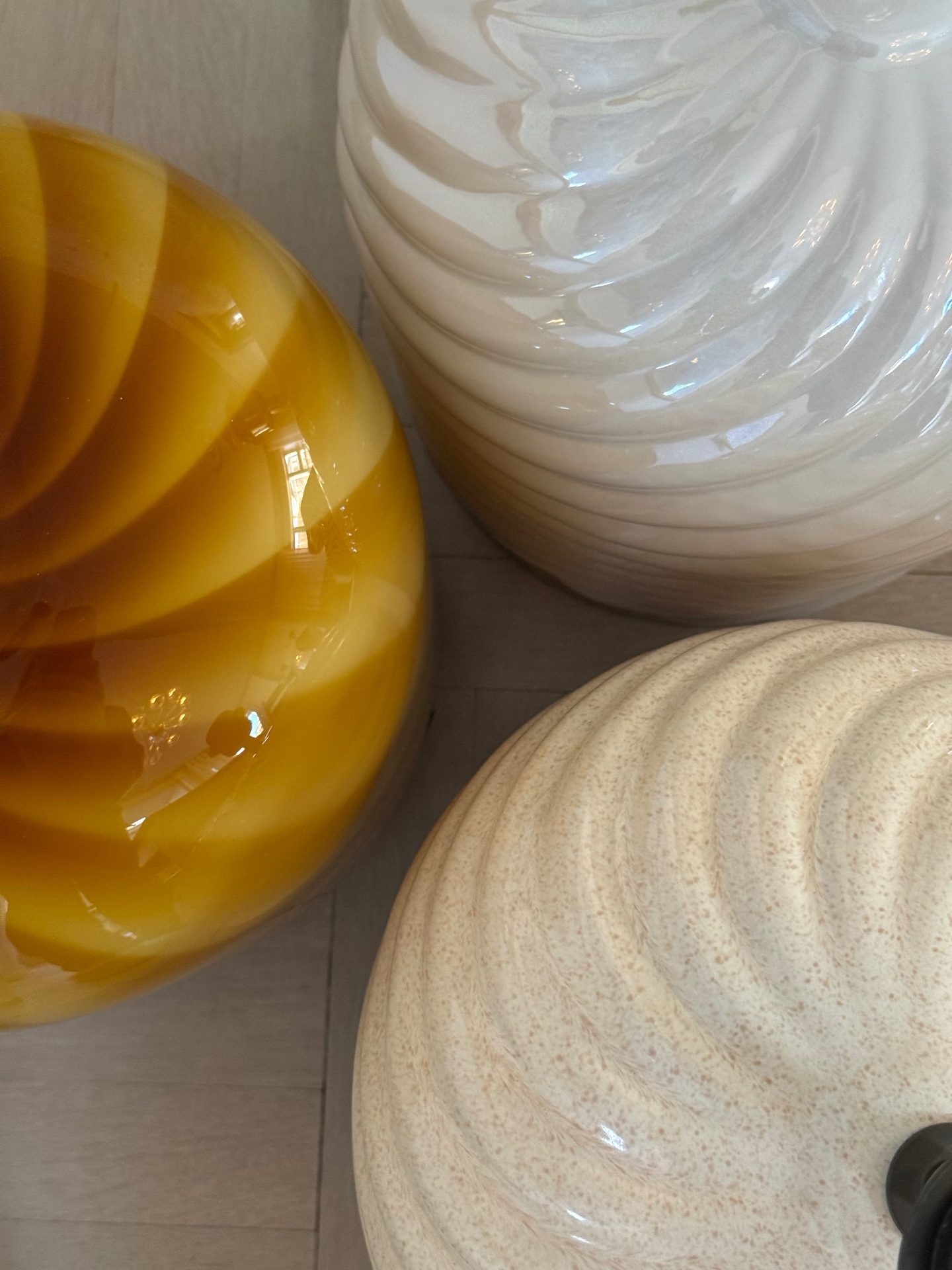
What to check before buying vintage lighting
Condition matters more than completeness. Original shades are a bonus rather than a requirement; many buyers prefer to re-shade in linen or parchment for a softer light. Look at the ceramic glaze for hairline cracks, check the weight and balance of the base, and examine the brass fittings for honest patina rather than active corrosion.
Electrically, vintage lamps almost always benefit from a careful rewire to current standards in the country they will live in. A trusted electrician can do this without changing the look of the piece. Ask about the cord, the switch and the bulb fitting before the lamp ships.
Finally, trust the seller's description. Lumont writes condition honestly, including the small marks that come with age, because a piece that arrives exactly as described is the only kind worth keeping.
Current Lumont lighting finds
A handful of pieces from the current shop. Availability changes; if something here is sold, the sourcing service below can help find a similar piece.
Shop current pieces
Browse the latest vintage and design pieces in the Lumont shop.
Ask Lumont to source something similar
Send a short brief and Lumont will look across a trusted network of European dealers and auctions for the right piece.