Lighting
Tommaso Barbi Lamps
Tommaso Barbi is one of those names that has become a kind of style shorthand. Among collectors of vintage Italian lighting, his work, and that of the workshops around him, has come to stand for a particular kind of sculptural calm. Lamps shaped like leaves, flowers, shells and softly geometric forms, often in ceramic and brass. This letter is a short, honest guide to the look, what to check for, and how Lumont describes pieces in this family.
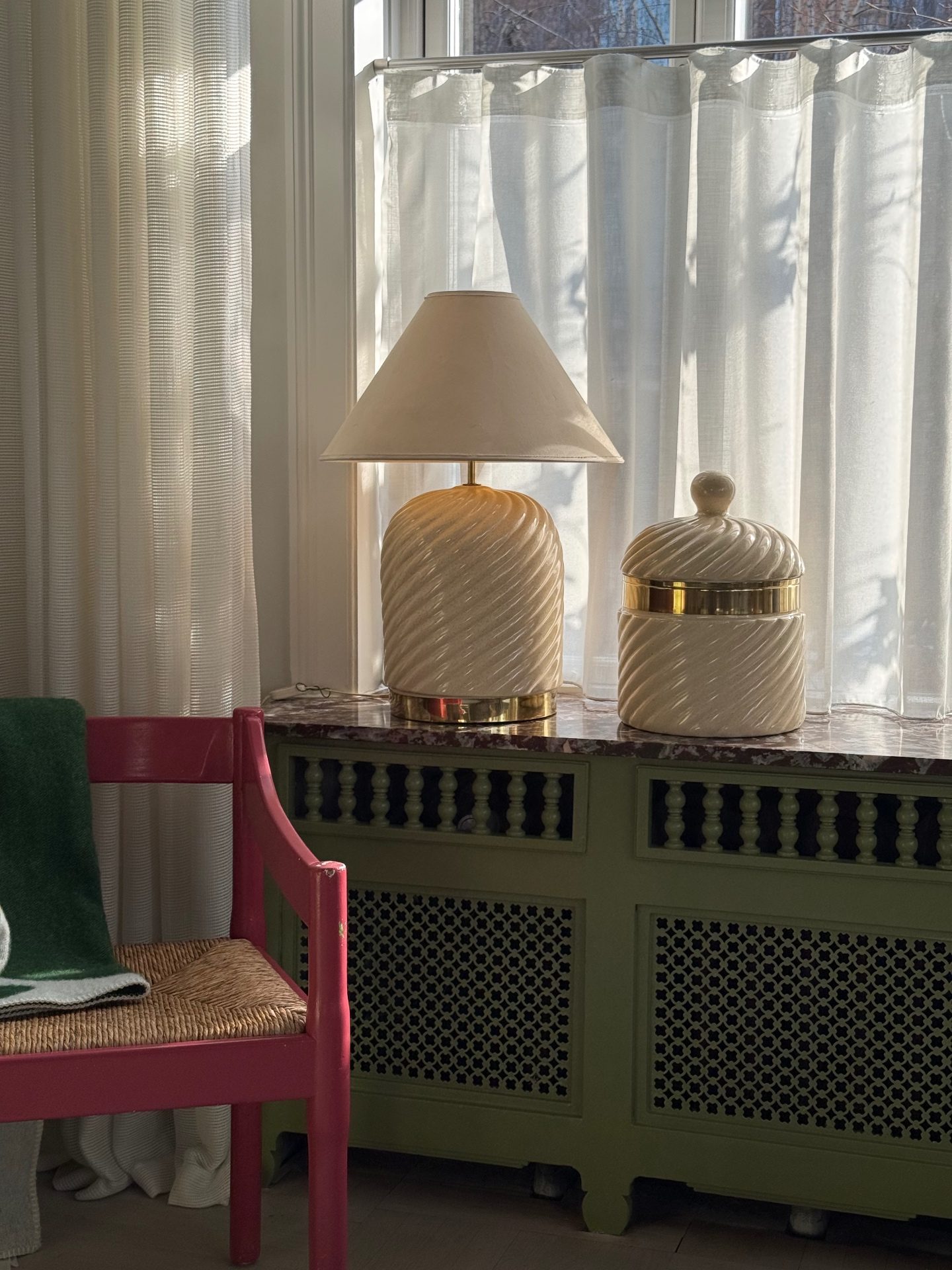
A decorative Italian lighting language
Italian lighting from the 1970s and 1980s often borrowed shapes from nature: pleated leaves, lotus buds, scalloped shells, soft globes, translated into ceramic, brass and glass. Pieces in this idiom are frequently grouped under Tommaso Barbi's name because his designs helped define the look, even when authorship of a specific lamp cannot be confirmed.
Lumont describes pieces in this family honestly. Where a lamp is documented as Barbi, it is named as such. Where it sits clearly in the same style but cannot be attributed with certainty, it is described as in the style of, without inventing provenance, period or rarity claims. Buying vintage well depends on this kind of restraint.
What to look for in shape, material and condition
Shape is the first thing to read. The most recognisable Barbi-style lamps are gently sculptural: a leaf curling around a brass stem, a closed lotus bud in cream ceramic, a scalloped shell shade rising over a fluted base. The forms are decorative but the palette is usually restrained (cream, off-white, brass, soft greens), which is part of why they sit so well in calm interiors.
Material tells you the second part of the story. Look at the ceramic glaze for an even, hand-finished surface. Check the weight of the base; well-made pieces sit heavy and balanced. Brass fittings should show honest patina rather than active corrosion or sloppy plating.
Condition matters more than completeness. Original shades are a bonus rather than a requirement; many collectors prefer to re-shade in linen or parchment for a softer light. Small chips on the underside of a ceramic base, or a faint patina on brass, are part of the object's life and rarely need restoring.
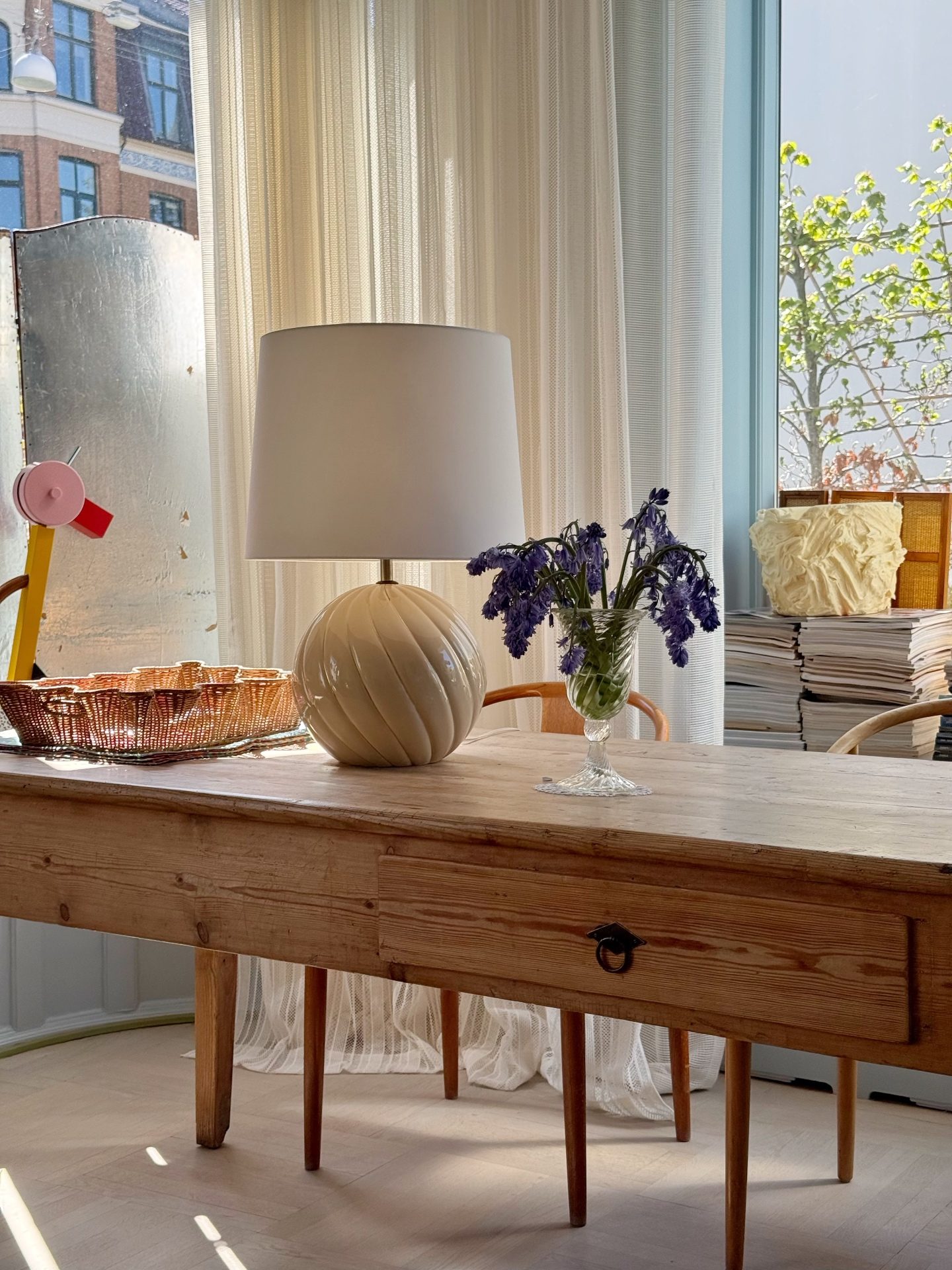
Styling Tommaso Barbi lamps in contemporary interiors
Barbi-style lamps balance ornament and restraint, which is exactly what makes them easy to live with. On a console, one lamp paired with a stack of books and a small vase reads as a still life. On a sideboard, two lamps frame a tray, a ceramic or a piece of art leant against the wall.
In a bedroom, a smaller ceramic Barbi-style lamp with a linen shade and a low-wattage bulb suits a bedside table better than a larger formal piece. In a living room, place one of these lamps on a side table and let it be the visual anchor of the corner. Turn off the overhead light in the evening and the room reorganises itself around the warm pool of light.
Mixed with modern furniture, clean architecture and a restrained palette, these lamps add character without making the room look like a period set. That is exactly the kind of interior Lumont sources for.
If the piece you want is sold
Stock turns. The shop changes every few weeks as new pieces arrive and others find homes. If a specific Tommaso Barbi or Barbi-style lamp is no longer available, the sourcing service can help. Send a short brief: shape, palette, approximate size, budget, and Lumont will look across a trusted network of European dealers and auctions.
Current Lumont Tommaso Barbi pieces
Pieces from this family that are currently in the shop. Availability shifts often; if a lamp here is sold, the sourcing service can look for a similar one.
Shop current pieces
Browse the latest vintage and design pieces in the Lumont shop.
Ask Lumont to source something similar
Send a short brief and Lumont will look across a trusted network of European dealers and auctions for the right piece.