Celebrations
Vintage Easter Pyramids
Easter pyramids belong to a small family of seasonal objects that mark the year without much fuss. Tiered, often candle-driven, carved from wood and populated by small figures (hares, eggs, flowers and birds), they bring a touch of folkloric warmth to a spring table without demanding much around them. This letter is a short, practical guide to what they are, how they work and how to live with one.
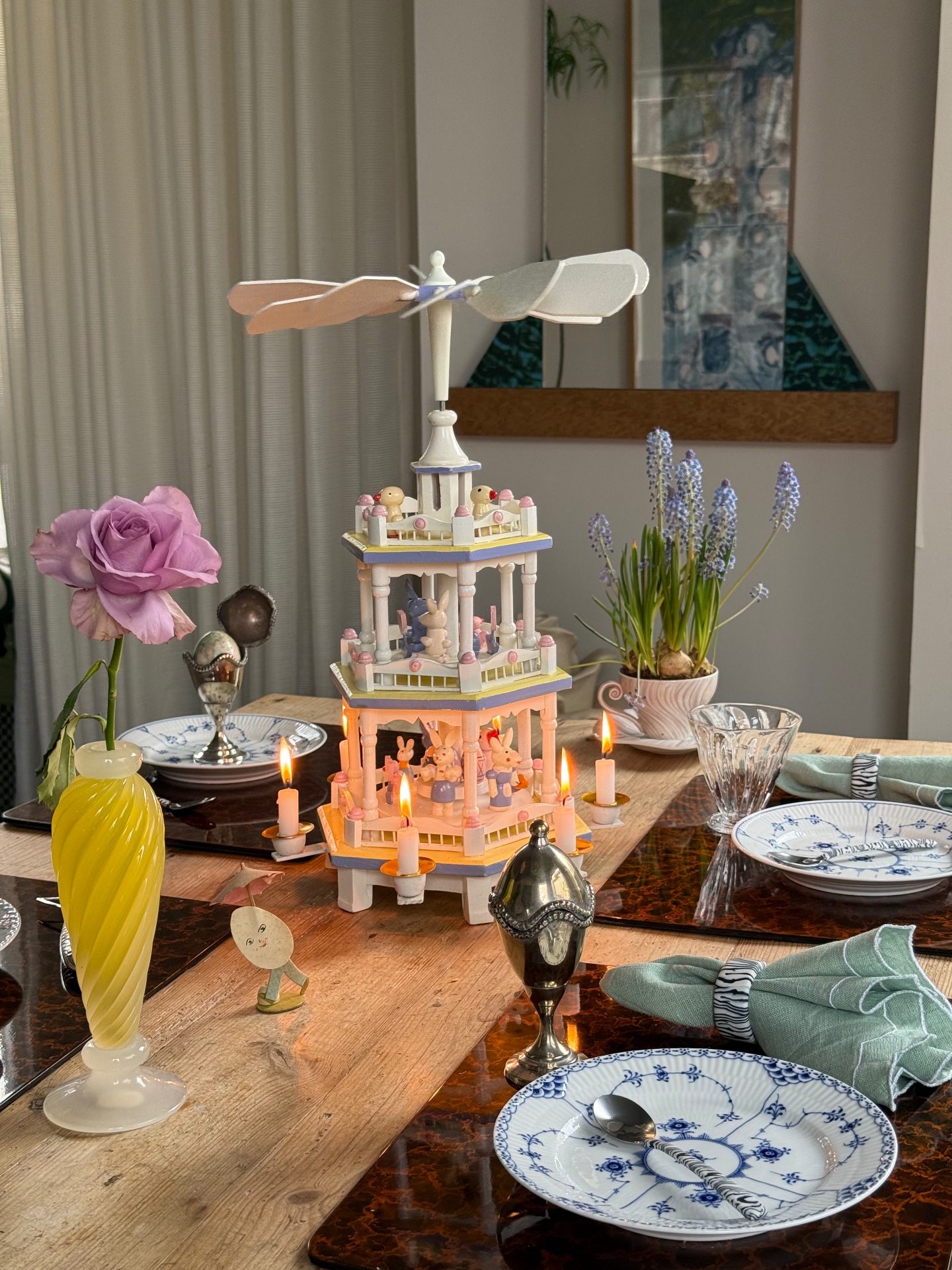
What is a vintage Easter pyramid?
A pyramid is a tiered wooden decoration with figures arranged on rotating discs, traditionally set in motion by the heat from candles below. The Christmas version is the more widely known one; the Easter version follows exactly the same idea, scaled to spring. Instead of nativity figures, the discs carry hares, painted eggs, small flowers and birds.
Vintage examples vary widely in size, from small table pieces of around 30 cm to larger floor pyramids of a metre or more. Lumont focuses on pieces with honest character: hand-painted figures, gentle patina on the wood, a sense of having been used and loved through many seasons.
How candle heat makes the pyramid move
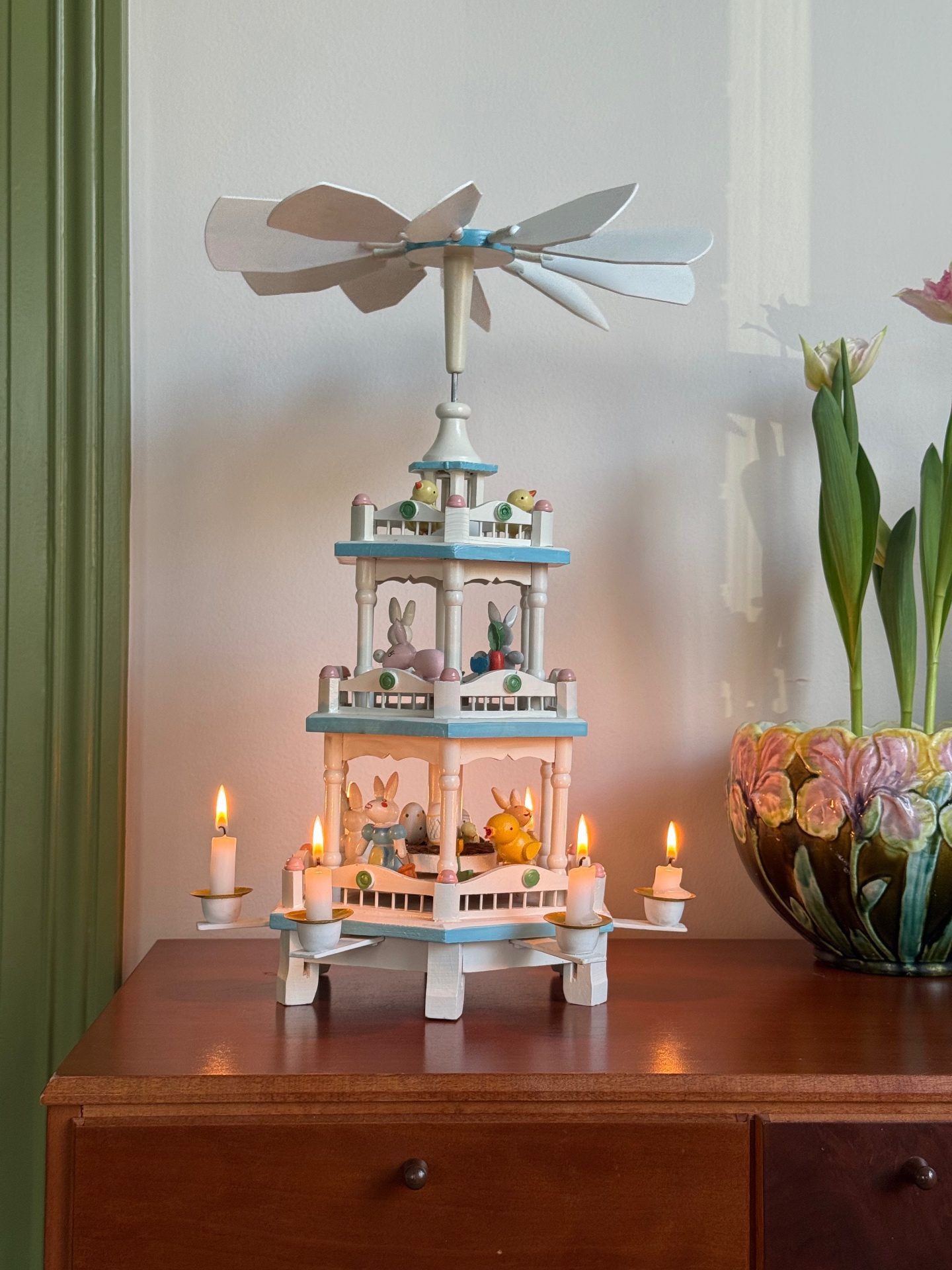
The mechanism is simple and beautiful. A set of candles is arranged around the base. Above them sits a horizontal fan of angled wooden blades, connected through a central spindle to the tiered discs that carry the figures. As the candles burn, heat rises, catches the blades, and gently rotates the spindle. The figures turn slowly around their tiers in time with the flames.
It is a slow, almost meditative kind of motion. A pyramid is not a fast object. It rewards being looked at over a long meal, and it changes the feeling of a room without making a sound.
Choosing candle size
Candle size matters more than it looks. Too thin and the flames will not generate enough warmth to turn the blades. Too thick and they will overheat the mechanism. Vintage pyramids are typically built for pyramid candles of a specific diameter (Ø14 mm, Ø17 mm or Ø20 mm), and using the right size is what makes the difference between a pyramid that turns smoothly and one that stays still.
If you are not sure which size your pyramid takes, measure the holders. The candles should fit snugly without forcing. When in doubt, write to Lumont and we will help match the pyramid to the right candles.
Styling for Easter, spring tables and celebrations
An Easter pyramid likes to be the centre of attention without crowding. Place it on a clear stretch of table, sideboard or shelf, and keep the surrounding styling simple: plain linen, a few branches in a glass jug, perhaps a small bowl of eggs. The pyramid will do the rest.
If lit, treat the candles with the care that vintage wood deserves. Never leave the pyramid burning unattended, keep it well away from curtains and other flammable objects, and stop the candles before they burn down to the holder. Many collectors enjoy the pyramid as a sculptural object during the day and only light it briefly in the evening, or skip lighting it altogether.
Beyond Easter itself, these pyramids suit any spring table: a long Sunday lunch, a small celebration, a children's birthday. Used a few times a year and then carefully stored, they become one of those objects the household waits for.
Caring for vintage wood
Keep pyramids out of direct sun and away from radiators; dry heat and harsh light fade hand-painted figures over time. Dust gently with a soft brush. Small chips and rubbed paint are part of the story and rarely need restoring. When the season is over, wrap the pyramid loosely in a cotton cloth and store it somewhere cool and dry, not in plastic.
Shop current pyramids and matching candles
Pyramids currently available, with the matching pyramid candles in the three common diameters. New seasonal pieces arrive each year.
Shop current pieces
Browse the latest vintage and design pieces in the Lumont shop.
Ask Lumont to source something similar
Send a short brief and Lumont will look across a trusted network of European dealers and auctions for the right piece.